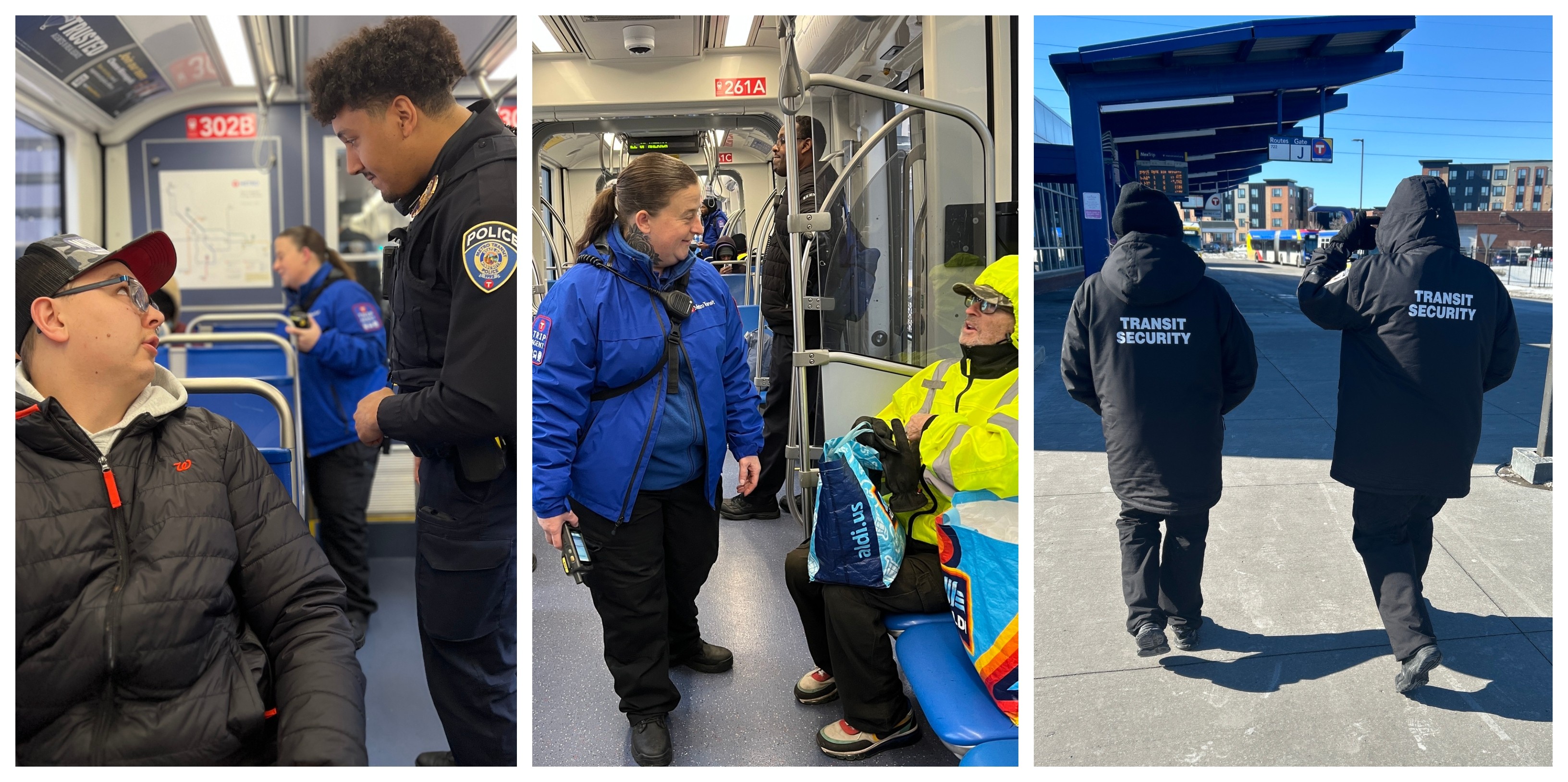
 Ongoing efforts to have a more visible and proactive official presence on transit are making a positive difference for Metro Transit riders.
Continuing a two-year trend, serious crimes like assault declined 14% from 2024 to 2025, according to new data from the Metro Transit Police Department. At the same time, proactive calls for police service – a measure of how actively police are addressing unwanted behaviors they observe on the system – increased nearly 32%.
“Serious crimes on transit are low and dropping, but any amount of criminal activity is unacceptable, which is why we will continue doing everything we can to be present and to prevent crimes from ever happening in the first place,” said Chief Joe Dotseth, interim chief of the Metro Transit Police Department.
Overall, there was a 17% increase in reported crime year over year from 2024 to 2025. The increase is attributed to a sustained focus on proactively addressing issues like smoking on transit.
Metro Transit police officers, social service providers, and prosecutors jointly focused increased efforts on the METRO Green Line corridor in 2025.
MTPD also re-instituted a team dedicated to trouble spots and its beat program, dedicating officers to busy areas like downtown St. Paul, downtown Minneapolis, University Avenue and the area surrounding the METRO Blue Line’s Franklin Avenue and Cedar-Riverside stations.
Coordinated layers of presence continue to build
A growing number of Community Service Officers (CSOs), Transit Rider Investment Program (TRIP) Agents, and supplemental security officers are also present across the system. Highlights from these layers of official presence include:
-
MTPD now has 35 CSOs, the most in department history. CSOs are students who work part-time at Metro Transit while earning their law enforcement degrees; many go on to become police officers, a promising sign for future department growth.
This spring, Metro Transit will contract with a community-based organization that will offer resources to transit riders experiencing behavioral health challenges and unsheltered homelessness. The agency continues to partner with the Saint Paul Downtown Alliance, whose Safety Ambassadors are at downtown St. Paul light rail stations, and is exploring a similar partnership in Minneapolis.
“Everyone deserves to have a consistently clean, safe and welcoming experience on transit,” General Manager Lesley Kandaras said. "While we know we have more work to do, we are encouraged by the progress we’re making through our expanded official presence."
Approaching safety and security from multiple angles
Growing the official presence on transit is a cornerstone of the Safety & Security Action Plan that is guiding public safety efforts.
Since it was endorsed by the Metropolitan Council in 2022, nearly all the more than 40 actions identified in the plan have been implemented or are in the process of implementation. Recent highlights include:
To review all the latest updates, view the Quarter 4 2025 progress report. And, as always, if you have ideas about other steps we can take, please let us know by emailing [email protected] or attending an upcoming outreach event.
Join the team that's making a difference
Metro Transit and the Metro Transit Police Department are filling a number of positions that have a hand in improving public safety. Review current openings and apply here.