Layers of presence
We are committed to providing a consistently safe, clean, and welcoming experience on our system. A cornerstone of our work is the ongoing effort to expand the official presence on transit by bringing more police officers, Community Service Officers, supplemental security officers, Transit Rider Investment Program (TRIP) Agents, and service providers onto the system.
We also continue to work closely with our many regional partners to support the shared work of addressing the larger, societal issues that appear on transit.
Below is a look at who you'll see on transit, and the role each group plays while on the system. Learn more about our ongoing efforts to improve public safety on transit at metrotransit.org/public-safety.
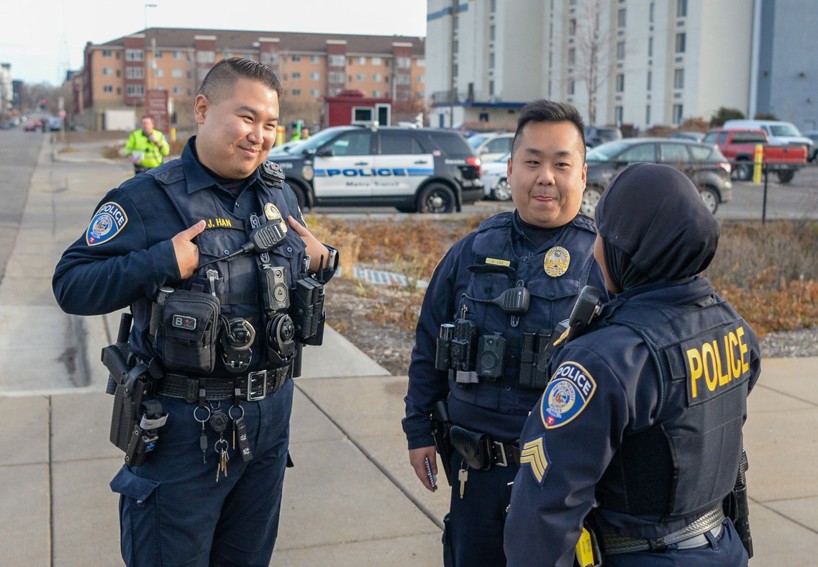
Police Officers
Metro Transit police officers respond to and investigate all crimes reported on transit and at transit facilities throughout the region. They also work with and assist partner law enforcement agencies. In addition to patrolling vehicles, stations, and stops, police staff remotely monitor activity onboard trains, buses, and stations using a vast network of real-time security cameras.
Learn more about becoming a Metro Transit Police Officer
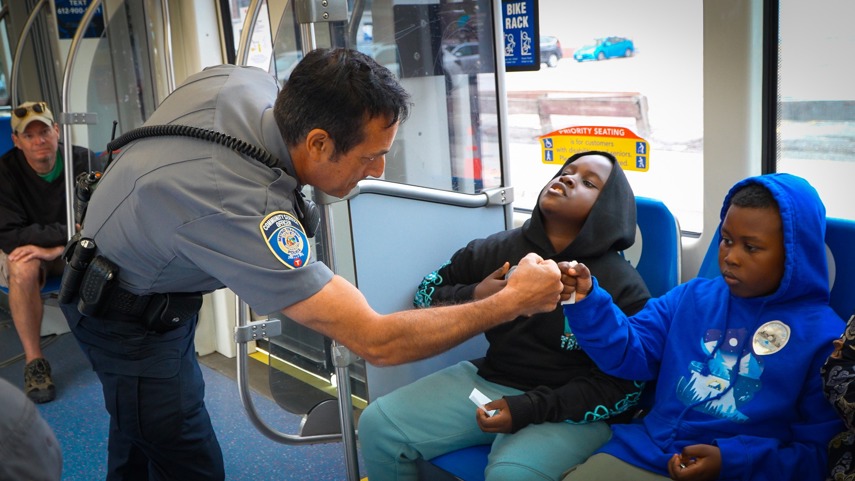
Community Service Officers
Community Service Officers, or CSOs, are part-time members of the Metro Transit Police Department who are enrolled in degree programs and on their way to law enforcement careers. Their duties include educating customers about the Code of Conduct and assisting customers on the system.
Learn more about becoming a Metro Transit Community Service Officer
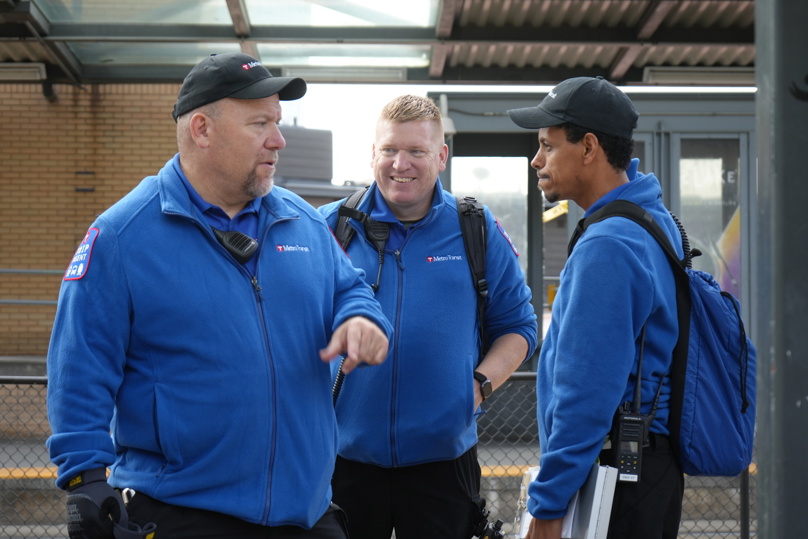
Transit Rider Investment Program (TRIP) Agents
Transit Rider Investment Program (TRIP) Agents are primarily responsible for inspecting fares, assisting riders, and upholding the rules for riding on light rail and bus rapid transit lines. TRIP Agents can also provide first aid, administer Narcan, and provide information about social services. As of February 2026, there are 130 TRIP Agents working across the METRO system.
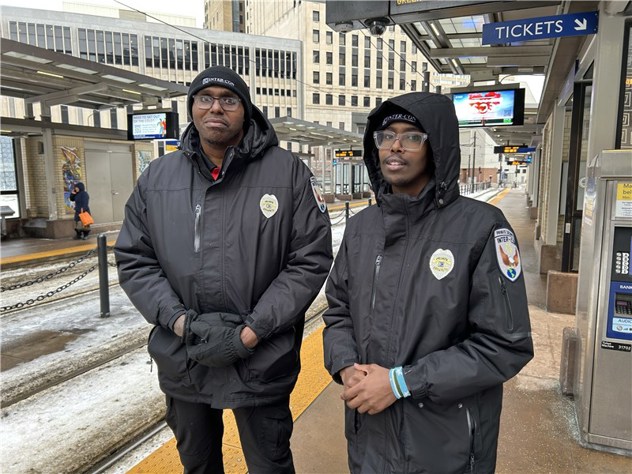
Supplemental security officers
Supplemental security officers are a 20- to 24-hour daily presence at some of our busiest locations, including the Brooklyn Center Transit Center, the I-35W & Lake Street Transit Station, and the Snelling Avenue, Central, Franklin Avenue, 46th Street and Lake Street/Midtown light rail stations. Throughout the day, security officers also visit light rail stations in downtown Minneapolis, downtown St. Paul, and at the MSP Airport terminals. Security officers are in place primarily to monitor conditions at stations and ensure people are observing rules for riding while on transit property (i.e. not smoking or playing loud music on transit property).
Safety Ambassadors
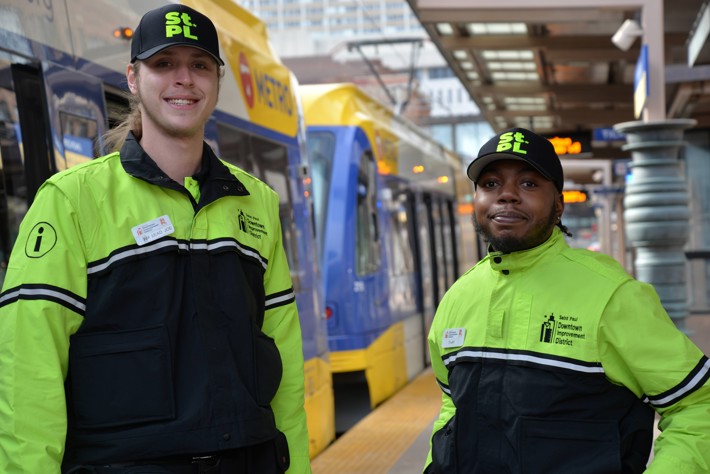
Safety Ambassadors from the St. Paul Downtown Improvement District are another layer of official presence at light rail stations and surrounding bus stops in downtown St. Paul. The ambassadors are at these locations to help uphold the Code of Conduct, which addresses behaviors like smoking and littering, provide directions, refer people to service providers, and serve as an additional set of eyes and ears for public safety professionals.
Community-based organizations
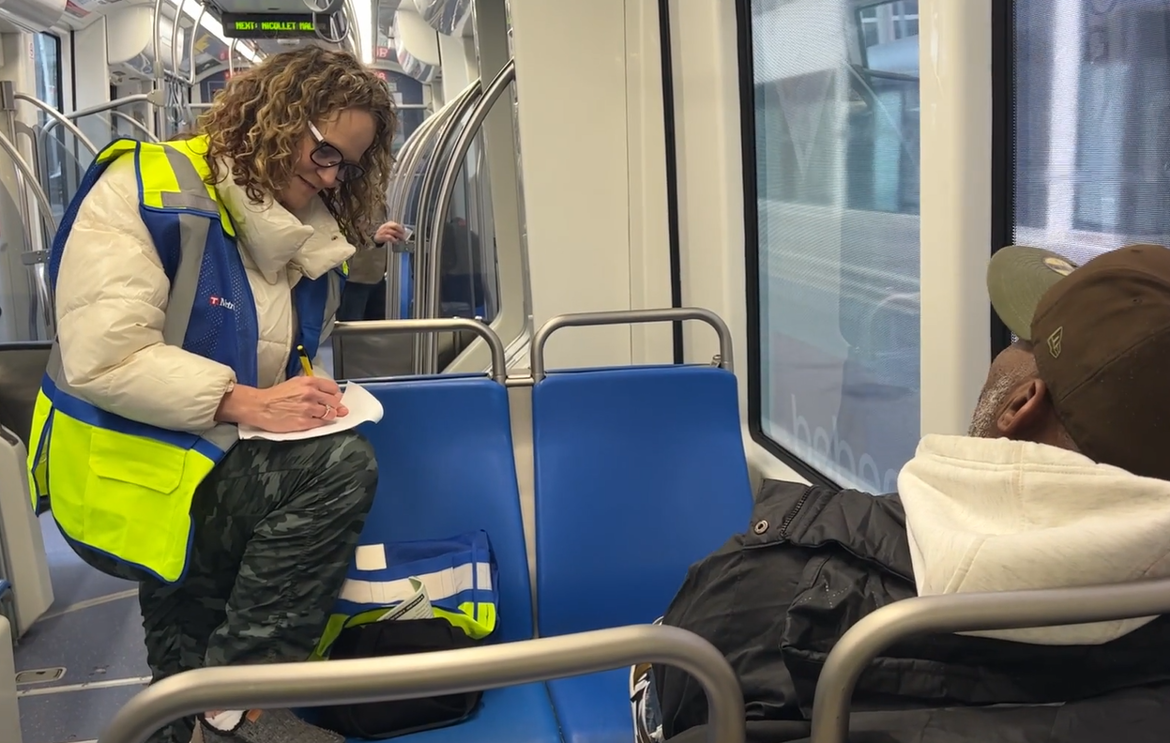
In 2026, Metro Transit will contract with a community-based organization that will offer resources to transit riders experiencing behavioral health challenges and unsheltered homelessness.
Operations staff
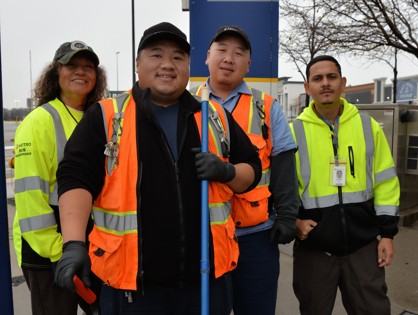
Cleaners, public facility workers, and transit supervisors are spread across the system monitoring, cleaning, and maintaining vehicles, station, and other transit facilities. Metro Transit staff are always in uniform while on the system.
Text for Safety
Have you ever been on a bus or a train and felt unsafe or saw something that just didn’t look right? Silently report issues – any time, any day – using Text for Safety. Text 612-900-0411, and we'll get back to you as quickly as possible.
Learn more about using Text For Safety on the Riders' Almanac blog