Annie O’Connor and her family moved to St. Paul's Merriam Park neighborhood so they could ditch one of their vehicles and spend more time using transit, including the METRO A Line. A decade later, they have no regrets.
After using the A Line and Green Line to get to classes at the University of Minnesota, Annie now rides up to four times a week to her job in Roseville. She also uses transit for shopping trips, to go to parks, and to visit relatives.
“The A Line became a regular route for me about three years ago when I went back to college,” Annie said recently from the Snelling & Dayton Station, which she looks after through the Adopt-a-Stop program.
As the A Line reaches its 10-year anniversary, stories like these can be found not just along its 10-mile corridor but across the region's ever-growing METRO network, defined by frequent and reliable service, enhanced stations, and vehicles that allow for faster, all-door boarding.
“We are not only celebrating the A Line. We are celebrating ten years of arterial bus rapid transit investment in our region,” General Manager Lesley Kandaras said. "These investments mean more people are benefiting from fast, frequent, all-day service that makes transit an attractive travel option."
With eight bus rapid transit lines and two light rail lines now in service, more than half of all rides are now being taken on METRO lines. The A Line alone has seen more than 13 million rides since opening.
Nearly 30% of the region’s jobs and 16% of the regional population are now within a half-mile of a METRO station. Before the A Line opened, 18% of jobs and 5% of people were within a half-mile of a METRO station.
“You hardly every have to check the schedule”
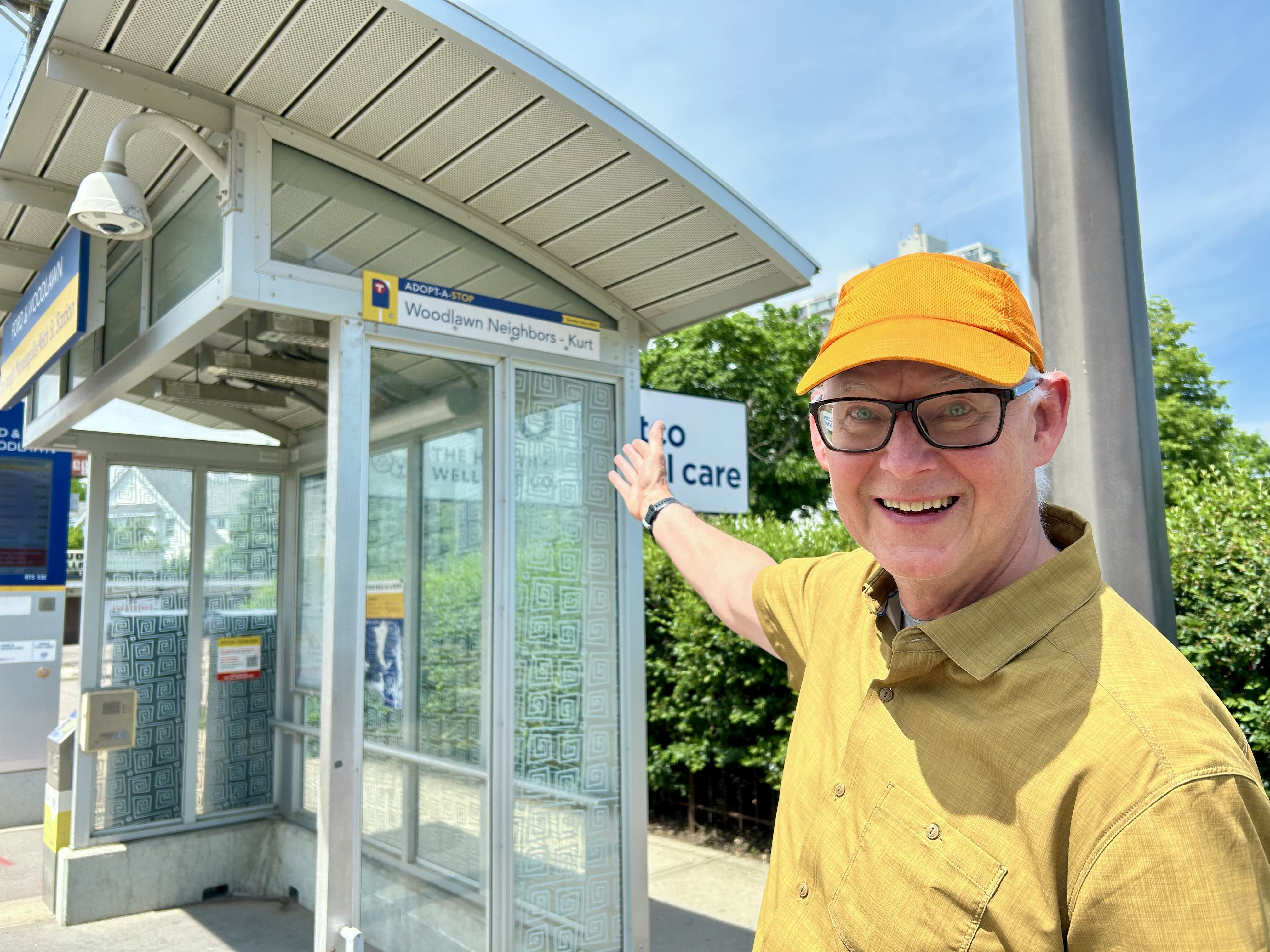
Among those who appreciate being near the A Line are Kurt Klussendorf and his wife, who in retirement have settled a block and a half from the Woodlawn & Ford Parkway Station.
After going down to one car, they’ve come to rely on the A Line, B Line, and Green Line to reach the places they enjoy, like the St. Paul Curling Club. The biggest perk? “You hardly ever have to check the schedule,” Kurt said.
Metro Transit operators have also come to appreciate the relative simplicity of bus rapid transit lines like the A Line.
On bus rapid transit lines, fares are purchased before boarding, stops are located farther apart, and transit advantages like bus lanes and signal priority help keep buses moving. All that adds up to a faster, more reliable trip.
“You’re not going and stopping constantly,” said Operator Jacqueline Donnell Lane, who drove the A Line on opening day and has operated off and on ever since.
Of course, Jacqueline also enjoys getting to know A Line riders, including lots of students from Hamline and Macalester universities and the University of St. Thomas, all located along the A Line corridor.
“A lot of my regulars say, ‘You always try to make it on time because we have to make connections.’ That’s heartwarming to me. I’m doing my job for them, and they value me,” Jacqueline said.
More improvements lie ahead
Looking forward, both the A Line and the larger METRO network are poised for continuous improvement.
Along the A Line, efforts are underway to replace decade-old real-time signs that have become harder to read over time. Improvements to the busy Rosedale Transit Center are also planned.
Additionally, more than $1.8 billion in planned development is being tracked along the A Line corridor, already home to some of the region’s top destinations, including the Minnesota State Fairgrounds and Allianz Field.
The region’s METRO network will grow in 2027 with the openings of the Green Line Extension, Gold Line Extension, and first phase of the METRO G Line on Rice and Robert streets. Plans for six future bus rapid transit lines that will arrive within the next decade are also advancing.
Learn more about our region’s growing METRO network