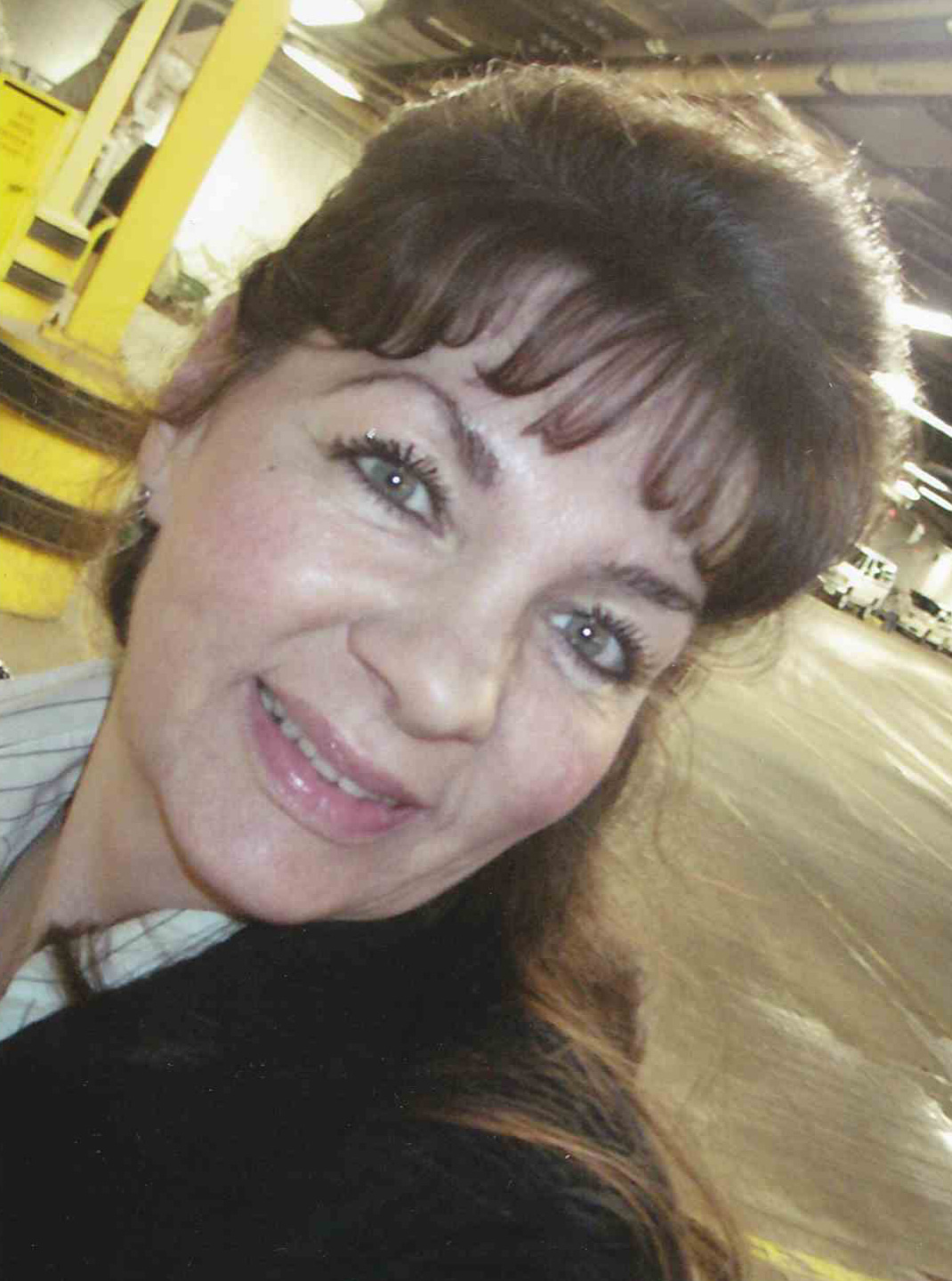
Ken Benzel 

Assistant Transportation Manager Blog Post Image
Posted by Drew Kerr | Dec. 31, 2021

After several years driving a school bus and carrying people across country as a motorcoach operator, Ken Benzel moved to the Twin Cities and started a new chapter in his career in transportation. “I’d seen all kinds of bus companies, but this one (Metro Transit) was like, ‘Oh yeah, that’s the one,’” Benzel said. “When you think of transit, you think of Metro Transit.” Benzel started as a part-time operator out of South Garage and retired from the same garage, as an assistant transportation manager, 30 years later.

Benzel enjoyed driving, of course, but he also appreciated the chance to leave work behind at the end of each day. “That was the best part – no matter what happened that day, when you pulled into the garage, let out the air and closed the door that was it,” he said. “The job never followed you home.” Still, Benzel aspired to do more, and after 12 years as an operator he became a full-time garage instructor. Later, excited to be a part of bringing light rail to the Twin Cities, Benzel became a rail supervisor, working in the control center and in the field and training the first group of train operators. Benzel said that period of his career was especially rewarding because it brought a motivated group of people together toward a common cause. Like others, Benzel worked nights and weekends when trains were allowed to operate on the railroad before opening. And then: “Opening day was huge, but the next day was absolutely thrilling,” Benzel remembered. “To see platforms filled with people going to work, going to school, was very, very satisfying.”

Benzel finished his career as an assistant transportation manager, supporting operators at the Heywood, Nicollet, East Metro and South garages. Coming back to bus, he said, was a fitting final chapter because it allowed him to spend time with many of the people he’d started with and who had become close friends.

In retirement, Benzel planned to spend more time hunting, fishing, traveling and flying.


Keith Stein 

Manager-Bus Maintenance Blog Post Image
Posted by Drew Kerr | Dec. 22, 2021

Just out of school and looking for full-time work, Keith Stein went through three jobs in three days. His fourth job, as a cleaner at the old Nicollet Garage, suited him well enough that he came back for a second day, then another, and ultimately led to a 41-year career in transit. “I was looking for a job with stability and good benefits, and that’s what this offered,” Stein said. “And, after a while, the place starts to grow on you.”

Stein, who’d gone to school for welding, had some experience from working at a gas station. But most of what he learned, he learned on the job. After working as a helper and fueler, he worked his way up into a senior mechanic role. At the same time, Stein was taking management classes offered through the fire department he volunteered for. And when a supervisor position opened at South Garage, he went for it. “I got the offer and started on the same shift just a few days later,” Stein remembered. “I said, ‘I used to be your buddy, but now I’m your boss. Things aren’t going to change a lot, but you have to understand you’ve got a job to do and so do I.’”

Later, Stein temporarily served as a maintenance manager through what would become known as the Leadership Academy. After applying a few times, he was offered a full-time manager position at South. He later held manager roles at Heywood and South, where he retired from in early 2022.

In retirement, Stein planned to spend time traveling, golfing, fishing, hunting and shooting trap.

Jack Shaw 

Rail Maintenance Supervisor Blog Post Image
Posted by Drew Kerr | Dec. 10, 2021

After serving in the Army, Jack Shaw came home, worked in a foundry, then found himself at the unemployment office scanning the help wanted section on a microfiche machine. It was there that he saw an ad for what was then known as the Metropolitan Transit Commission. He applied and soon began working as a vault puller, the first of several jobs he’d hold during a 36-year career in bus and rail maintenance. Shaw retired in late 2021.

Shaw was an experienced Army mechanic who’d worked in garages during high school. The skills served him well in bus maintenance and he bid into a technician role as soon as he had enough seniority to do so. Later, he was part of the first group of technicians to transfer to light rail and spent months in classes at Dunwoody College preparing to work on the new fleet of light rail vehicles. “I’d gotten a little tired of doing the same thing on the buses,” Shaw remembered. “There were so few of us at rail that we were doing it all – changing tires on the trucks, electrical, hydraulics. The variety was really nice.”

After gaining experience, Shaw became a foreman and supervisor. As body shop supervisor, he said one of his proudest accomplishments was reducing the time it took to restore heavily rusted light rail vehicles from more than 2,000 hours down to about 800 hours. During his tenure, body shop technicians also installed plastic seats across the fleet and replaced dozens of broken windows. Shaw was quick to share credit for that and other work. “I told the team, ‘I’m a tool. What do you need me to do to get your job done?’” he said.

During his time at Metro Transit, Shaw was deployed several times as a member of the National Guard, including to Iraq after 9/11. In retirement, Shaw planned to buy a motorhome and travel, staying at military bases down south.


Paul Poppie 

Facilities Technician Blog Post Image
Posted by Drew Kerr | Oct. 25, 2021

Before starting his career at Metro Transit, Paul Poppie had repaired tanks, trucks, and other equipment for the U.S. Army and earned a degree in diesel mechanics. So, when he landed his first job fueling buses at South Garage, he almost didn’t make it past the first year. “I had a new, fully stocked toolbox and was thinking, ‘I didn’t go to school for this,’” Poppie said. It didn’t take long to move up, though, and Poppie ended up with a 37-year career in transit. He retired in November 2021.

During his time in Bus Maintenance, Poppie worked at nearly every garage but spent most of his time at Nicollet, where he worked for more than 20 years. In addition to working at several locations, he also had a variety of different roles over the years, performing engine tune-ups, inspecting new buses and repairing wheelchair lifts, powertrains, injectors and transmissions.

Poppie found even more variety when he moved to Facilities Maintenance, where he spent the last five years of his career as a facilities technician. “We do everything in this job – fixing toilets or sinks, changing out glass, cutting grass to who knows what,” he said. “Every day is different….This has probably been my favorite job because you do so many things.”

In retirement, Poppie planned to sell his home in White Bear Lake and move with his wife to northern Minnesota, where he could spend more time hunting, fishing and boating.

James Leonard 

Blog Post Image
Posted by John Komarek | Aug. 20, 2021

After 7 years working in housing construction, James Leonard was laid off. In 1987, his brother-in-law suggested he apply to be a bus operator like him, and even drove him onsite to fill out an application.

"I was thinking of going back to finish college," Leonard said. "But after all the fun I had as a driver, I forgot all about it and have been here ever since."

Growing up in St. Paul, Leonard was no stranger to transit. He took routes 16 and 21 to and from the Mechanic Arts school, and to the roller rink with friends. He fondly remembers the operator who built a relationship with him and the vehicle he drove. They were the same models he'd drive, too.

"Those red buses, the Am Generals and Flexes… they had no power steering or air conditioning," he said. "You'd have to stand up to make corners."

Without air conditioning, he got creative on staying cool while operating some of his favorite routes, like Route 18 or the old 6 line. As the years progressed, he was glad to have power steering and AC on every bus, which helped not only operators, but also customers.

"I really enjoyed being onboard with customers and seeing a variety of different people," Leonard said. “And building relationships with those customers who rode with me five days a week.”

He's grateful for his time at transit, which he credits helping him raise a family and put his three kids through college. He’ll miss the cards and well wishes from customers, but after 34 years, he’s looking forward to retirement.

"I truly enjoyed my job, but now it's time for a new adventure," he said.

In retirement, he plans to leave winter behind, first by moving to Las Vegas and then eventually hopes to live abroad in southeast Asia.

Ann Marie Deneen, #1274 

Operator, South Blog Post Image
Posted by Drew Kerr | Aug. 11, 2021

The first of five daughters, Ann Marie Deneen grew up in St. Paul near the old Snelling Garage. Her father rode Twin City Lines and, living in a one-car household, she too would come to rely on the bus (Route 21) to get from her home in Desnoyer Park to school, downtown and the Midway. Often, she sat up front with her older neighbor and joined in on conversations with the driver. Those experiences would prove formative.

At 23, Ann Marie was working as a hairdresser but was frustrated and wondering, “Is this really happiness in life?” The question led her to pray for change (her father’s influence) and she was soon asked to join the Sherwin Williams Paint Co. as a pick-up and delivery driver, visiting auto body shops across the Twin Cities. After having some fun with that job, a friend suggested applying to become a bus driver.

If hairdressing wasn’t her calling, being an operator, she quickly learned, was. “I just knew right away this was it,” said Ann Marie, whose mother encouraged her. “I liked the driving, helping people and was pretty safe. It was a real match for me.” Ann Marie’s love for her work, customers and co-workers led to a 40-year career in transit and a nickname, Diva. The nickname, she said, was given for her command of the bus and the careful eye she kept on her customers.

At first, Ann Marie was tentative behind the wheel. The first time she drove a 60-foot articulated bus, she panicked and cried. But as she did throughout her career, Ann Marie faced her fears and persevered. She credits three amazing people at Snelling, where she started, for taking her under their wings and helping her through the job’s initial challenges. She was also motivated by brief interactions with Ruby Peterson, one of the longest-serving female operators, who broke into the male-dominated field when men were sent to serve in World War II. “Ruby had me in awe,” Ann Marie said. “We never said a lot to each other, but her presence was huge back then.”

Over time, Ann Marie became more and more confident behind the wheel and took on several busy routes where customers had to stand in the aisles, including routes 4, 16 and 21. (At this point, Ann Marie was happy more articulated buses were being added to the fleet.) Ann Marie was among the first operators to work out of the South Garage when it opened in 1980. She was initially unsure about driving in Minneapolis but received kind support from dispatchers and eventually became comfortable enough to become an extraboard operator. The Route 54, though, remained a favorite because it allowed her to drive up and down West Seventh Street, where her parents grew up, and past Ann Street, where she got her name from. Her proudest accomplishment, she said, was her 32 years of safe driving and earning a 25-year safe driving award and watch.

At South, Ann Marie was known for organizing festive retirement parties, with custom transit cards and balloons. The attention she gave to her co-workers was influenced in part by her mother’s sudden passing in 1996. Growing up, Ann Marie’s mother went out of her way to celebrate her five precious girls. On the bus, Ann Marie also became something of a motherly figure, keeping an eye out for people in need. Toward the end of her career, she put her trust in a regular passenger who was a joy to so many riders and helped him find stability.

While Ann Marie was always giving, she said the job also had its own rewards and provided stability during life’s difficult times. “This work kept me happy when it wasn’t so easy,” she said.

Ann Marie retired in January 2020, shortly after a lovely 40-year surprise party. In retirement, she and her sisters are caring for their father; Ann Marie is also enjoying time with her husband, beloved cat, family and friends. “I’ve been blessed,” she said.

Watch: Ann Marie was featured in a 2019 episode of "Hey! Where Does This Bus Go?"

Sam Caron 

Blog Post Image
Posted by John Komarek | May 27, 2021

In 1988, Sam Caron began his career at Metro Transit as a part-time police officer, splitting his time as a Sergeant with the Saint Paul Police Department. When he retired from the force, he was hired to work in the Transit Control Center (TCC). “They were looking for someone with both police dispatch and Metro Transit experience,” Caron said. “After getting that job, I discovered there were other places I could work here.” 

When he started in the TCC in 2000, it was located on the main floor of the Heywood Office and shared similar duties with Street Operations, which exposed him to working both jobs and how the system works. He eventually moved to Street Operations as a Street Supervisor. In 2009, he became an assistant transportation manager at Nicollet, then moved to East Metro, where he ends his career. Through large events like the Super Bowl and Final Four, and later the COVID-19 pandemic, he served as an acting garage manager. He also served as one of Metro Transit’s representatives on APTA’s Security and Emergency Management Standards Working Group.  

“I really enjoyed all my jobs. They were complex and always challenging, due to technology or simply what’s happening in the world,” he said. “But I especially enjoyed working with operators every day.” Caron always aimed to create a welcoming atmosphere in his office, starting with a simple candy dish. “There are times operators are required to meet with me, but I’d rather have more interactions outside of those times to help build relationships,” he said.  

In retirement, Caron plans to golf frequently and in warmer climates, work on some home remodeling projects, and spend quality time with his family and friends.

Peter Durant 

Mechanic Technician Blog Post Image
Posted by John Komarek | May 27, 2021

Peter Durant credits his aunt’s relationship with a fellow nurse during World War II as the reason he’s here instead of Barbados. While abroad serving as a nurse for the British, she met a Minnesotan nurse, who sponsored her immigration following the war. It wasn’t long after that Durant and his mother were sponsored by his aunt.

“I’ve now been in Minnesota now longer than I’ve been in Barbados,” Durant said. “We came here to seek opportunity, and I found it here.”

After arriving in Minnesota in 1977, he began work as a mechanic – a course of study he took after high school. Previously working on diesel boat engines in Barbados, the transition to buses was natural. In Minnesota, he started at a big box retailer’s garage, then moved to an interstate bus company. During a mass layoff as they closed their Minneapolis location, he applied to be a Metro Transit mechanic in 1985.

“My old employer offered me a job, but it required me to move. But, I wanted to stay close to my family here,” he said. “Applying to Metro Transit was the best decision I made in my career.”

Durant’s career spanned 35 years and he worked in nearly every single garage, except Old Northside and East Metro. The bulk of his time was at Heywood, but today he finishes his duty at Ruter Garage. He looks fondly upon his time, the friends he made, and amazed at the number of changes throughout the years.

“Life is like drifting in the ocean; you never know where it will carry you.” he said. “But when opportunity comes, grab it and hope for the best.”

In retirement, he returns to the Caribbean with his wife to build a retirement home on a plot of land they’ve purchased. He looks forward to inviting family to enjoy the home and the fruit trees he’ll plant, and perhaps join him spearfishing for red snapper.

Christy Bailly 

Director-Bus Transportation Blog Post Image
Posted by Drew Kerr | April 29, 2021

Christy Bailly didn’t plan to make a career in transit. After finishing high school and moving to the Twin Cities, she went to the University of Minnesota for a year then set out to make a career, working at an employment agency, in retail and designing clothes. When her father, a 20-year bus operator, suggested getting a job with a pension and insurance, she applied to work in the Transit Information Center. At the time, she thought of it as a “short stopover” on her path to something different. Her time in the TIC may have been brief, but her career in transit was not. Over the course of four decades, Bailly took multiple opportunities to assume more responsibility and improve conditions for operators like her father, who motivated her throughout her career. In April 2021, Bailly retired as the Director of Bus Transportation.  

Bailly’s dedication was evident from her earliest days in the TIC. Shortly after she was hired, she underwent knee surgery and relied on co-workers to carry her up the stairs to work. Once there, she flipped through 3-foot wide books, her leg elevated and on ice, to help customers plan their trips over the phone. Her persistence and warm demeanor made an impression on supervisors who suggested she consider a role in management. That day would come, but not until after Bailly spent time as an order filler/dispatcher for Project Mobility, a paratransit service. Bailly’s job was to review trip requests, calculate travel times, create runs for operators and let customers know when they could expect to get picked up. When paratransit services went to private providers, Bailly helped monitor their service and provided feedback. It was in that role that Bailly learned about the supervisors who helped manage regular route service, an exposure that would set the stage for the next phases of her career.

Eager to make a case for herself, Bailly learned as much as she could by sitting down with several managers and carefully studying rulebooks on her own time. To her surprise, though, she didn’t get the job. A week later, she got a second call – one of the two people in front of her wouldn’t be immediately able to take the supervisor position, which was now being offered to her. Bailly spent the next 11 years as a supervisor, a role that allowed her to become an advocate for drivers like her father. “I saw what the job did to my father, how it became so stressful at the end, so my main goal was to make the job better for drivers,” Bailly said. In practice, that meant spending hours patiently listening to operators, joining them at the hospital after an assault and making the case for the creation of the Peer Support program, which she considers one of her signature accomplishments. Bailly never shied away from the job’s difficulties, either. Throughout, she worked nights and didn’t hesitate to respond to potentially volatile situations. Meticulously dressed in a linen suit, clipboard in hand, she would often arrive at a scene before police and take control of the situation. “Maybe I was a little too brave but that was just my style,” she said. “I talked my way into things and out of things pretty well.” Bailly also worked closely with Service Development to improve schedules, helped make the case for supervisors to get computers, then a novelty, and developed an automated logging and reporting system for supervisors call DSL, along with the Operating Condition Reports that allowed operators and staff to elevate their concerns.

Bailly’s enthusiasm led to roles as an assistant manager and manager in street operations, and as an assistant director of field operations. After six months as the acting director of Bus Transportation, she was asked to apply, earned the promotion, and spent the last 11 years of her career leading the department. During her time in leadership, she continued to advocate for drivers by promoting new training and safety programs and creating a stronger support system for operators who are assaulted. Bailly was particularly proud of a campaign to reduce farebox conflicts by encouraging operators to see their roles as fare informers instead of fare enforcers. Other accomplishments include earning her Emergency Management Certification and spending more than 12 years on APTA’s Security and Emergency Management working group, the creation of a team of communications specialists who communicate with riders in real-time, and a training program educating operators about human trafficking. 

In retirement, Bailly planned to spend more time advocating for the protection of wolves and the environment, traveling, reading, and visiting family. Looking back, she said she was glad that she took her father’s advice and that she made the most of the opportunities that arose during her career. “When I started, management was the last thing on mind. I thought I’d get in, get some pension, make my dad happy and get out,” she said. “But it got in my blood right away. Working with operators, customers and the community, making a difference…the love just grew and grew.”

Donald Hills  

Blog Post Image
Posted by John Komarek | April 13, 2021

As a factory worker, Donald Hills didn’t often get to see the sun. “I’d start before the sun rose and end after it had set, especially during winter,” Hills said. “And, I had to work a lot of overtime just to make ends meet.”  

So in his 30s, Hills applied for a job that came with a window to the world. His 30-year career as a bus operator began at Ruter Garage, then known as Shingle Creek. There, he met Martin J. Ruter. “I remember being surprised when I met him. He asked me to help him figure out how to use the parking brake on a new type of bus,” Hills said. “That showed me early on that no matter how long you’ve been on the job there's always something new to learn and a new bus to master.”  

At the start of his career, Hills faced some difficulties. He credits Sam Jacobs, then a manager at Shingle Creek, for keeping him on track with a simple question – “What’s wrong?” “I wouldn’t be here all these years later if he hadn’t asked me that question,” he said. Hills also recalls how nervous he was about working nights. He relaxed, but not before earning the nickname “rookie” from regular customers. “Looking back, I shouldn’t have been so sacred,” he said. “You just need to talk to people onboard and you’ll be alright.”

Hills’ 30-year career was preceded by a childhood in Minneapolis, where he grew up riding the old Route 26 with his mother to downtown. Today, the driveway to one of his old houses is a bus stop along Highway 252.

Hills retired in early 2021. In retirement, he and his wife planned to travel the country with a camper in tow. As a history buff, Hills was especially excited to visit Civil War sites along the east coast and other historical landmarks.

Page 7 of 25 << < 1 2 3 4 5 6 7 8 9 10 > >>