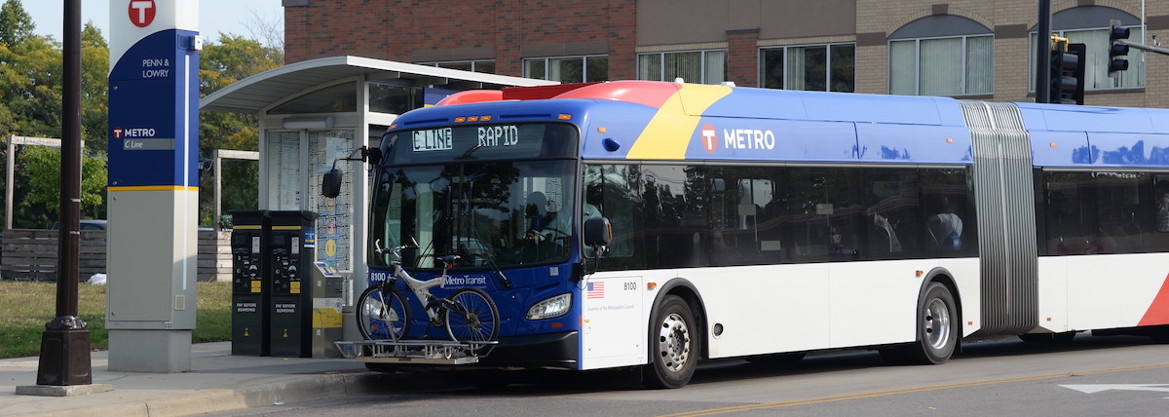
How the region benefits from a growing BRT network
METRO bus rapid transit (BRT) ridership stayed strong during the pandemic and is recovering faster than other service types, reflecting a rising demand for all-day, all-purpose service.
- BRT ridership increased 115% (7.2 million rides) from 2022 to 2024
- BRT ridership accounts for about 16% of regional rides
- Rides on the D Line went up more than 97% from December 2022 to December 2023
- Orange Line weekday ridership averages 1,550+
By 2030, a planned 165-mile bus rapid transit network of 12 lines will offer fast, frequent, all-day service to many communities in the Twin Cities region. By 2030, BRT will:
- Serve 580,000 people and 600,000 jobs with all-day, all-purpose trips
- Advance transportation equity and reduce racial disparities:
- 44% of people served by this network identify as Black, Indigenous, or People of Color (BIPOC)
- 13% of households to be served by BRT don’t currently have access to a vehicle
- Help households reduce their environmental footprint:
- Typical households near BRT emit less greenhouse gas than the rest of the region and are well below the national average, according to EcoDataLab data
- Benefit from and contribute to transit oriented development (TOD), which is being concentrated in the 3% of land along high-frequency transit, including BRT corridors. That comes from the Metro Transit TOD Office’s annual Development Trends Along Transit report which found:
- In 2021, $1.6 billion or 36% of regional development was permitted near high-frequency transit.
- From 2009-2021, $13.7 billion in development was permitted near high frequency transit. This includes 41% (45,000 units) of the region’s multifamily development by permit value.
- Another $9.7 billion in development is planned along high frequency transit, which is 67% of planned future development. This will add another 35,700 multifamily units, nearly doubling the number of homes built since 2009 with immediate access to high frequency transit.