Title: Old Oaks
Artist: Nancy Blum
Material: Ceramic tile
Fourteen Italian glass mosaics of oak trees and related nature images (birds, squirrels, acorns, etc.) set into the walls and panels of the platforms.
Title: Old Oaks
Artist: Nancy Blum
Material: Ceramic tile
Fourteen Italian glass mosaics of oak trees and related nature images (birds, squirrels, acorns, etc.) set into the walls and panels of the platforms.
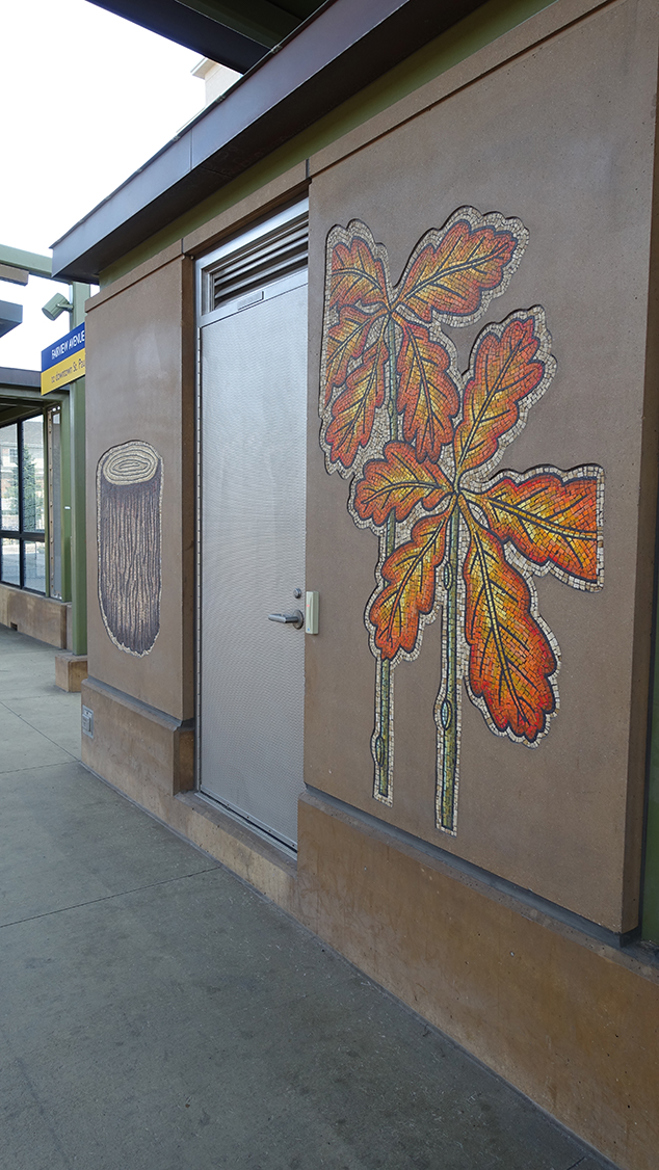
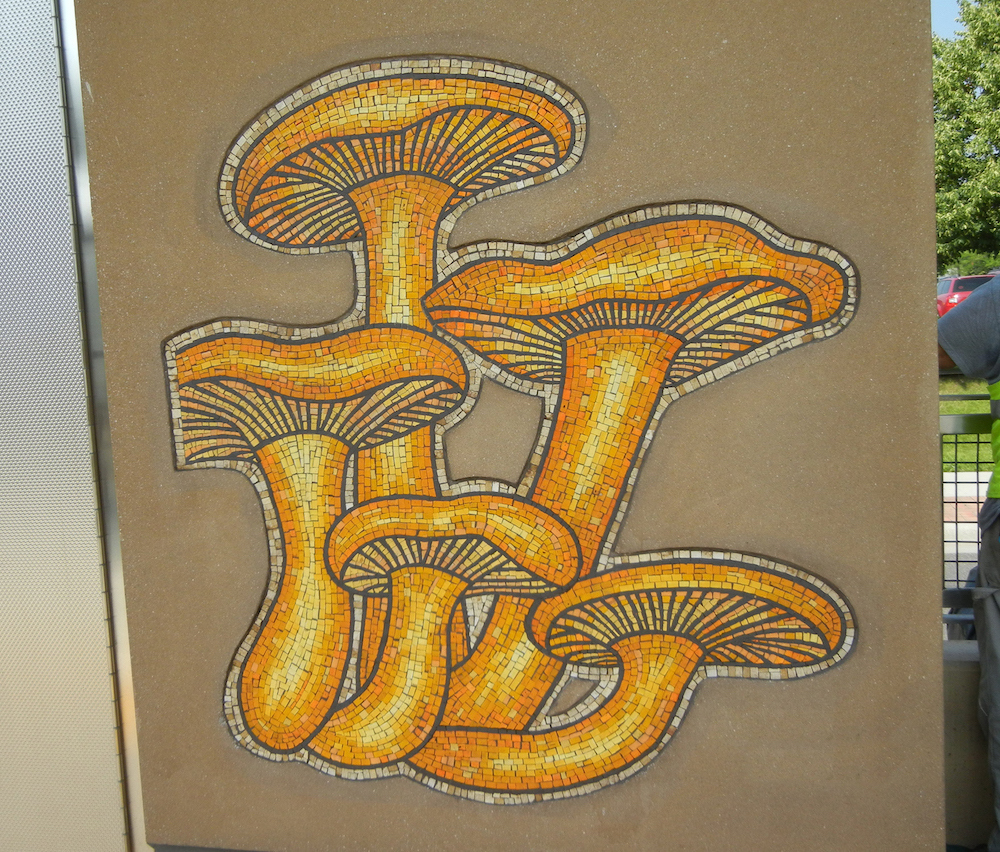
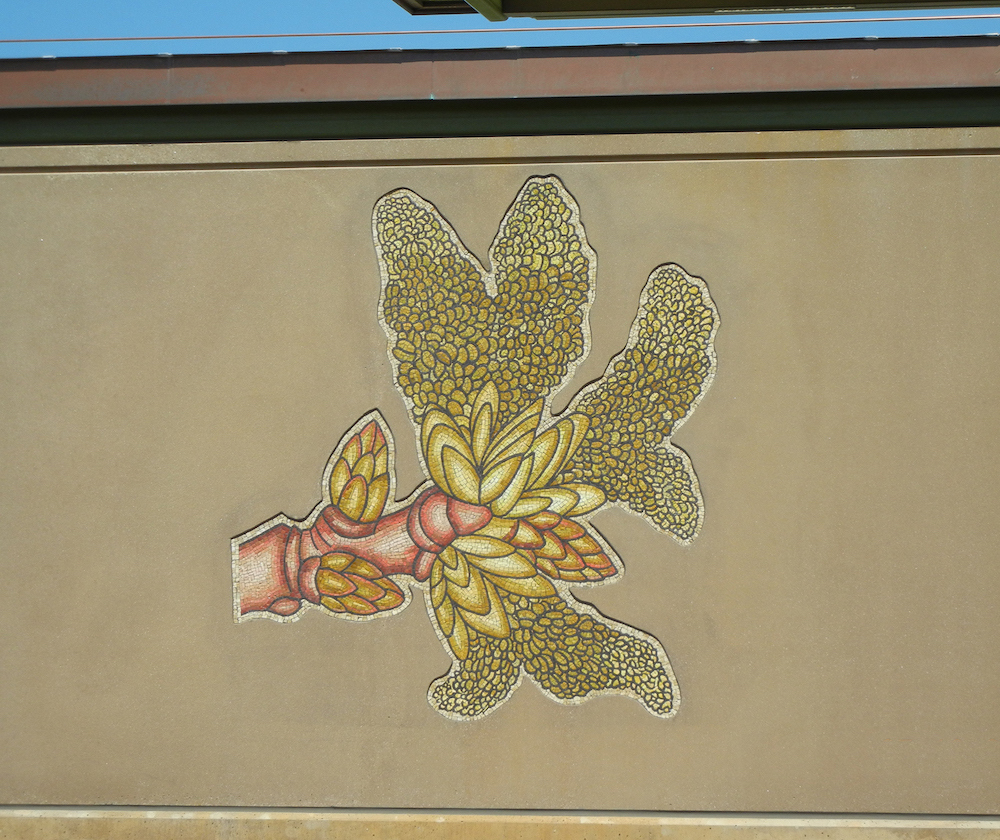
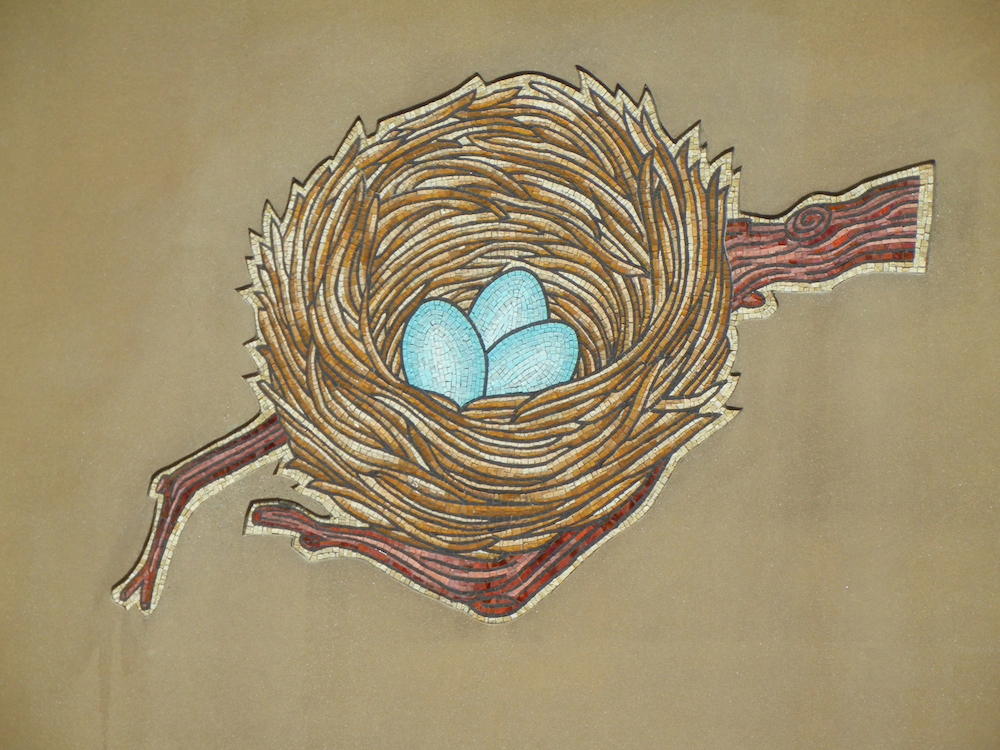
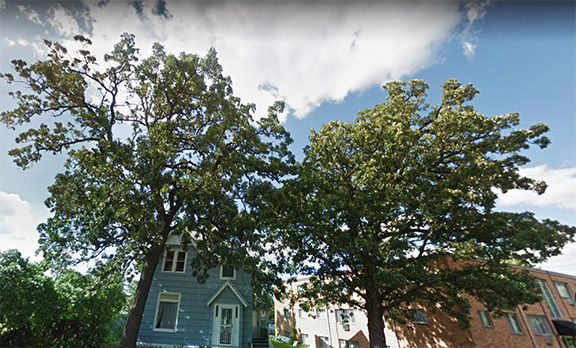
The mosaics of Fairview Station reflect the old oak forests in the surrounding neighborhood. The two platforms represent different seasons of year – the eastbound platform contains images that relate to the oak tree in spring and the westbound platform contains images that relate to the oak tree in the fall. In winter, the platforms are a reminder of fairer weather and the treasures this neighborhood holds.
Nancy Blum is a Brooklyn based sculptor and artist who is well known for her public artwork commissions across the United States.
Many of her large-scale works carry botanical motifs to represent continuity and growth. Blum empowers the organic and the ephemeral through her work and propels the connectedness of all beings in the world through not only aesthetic beauty but also a high level of craftsmanship. Apart from her public art commission projects in various cities’ transit systems, Blum has also participated in solo and group exhibitions.
Blum was the recipient of 2006 Peter S. Reed Foundation Grant in New York.
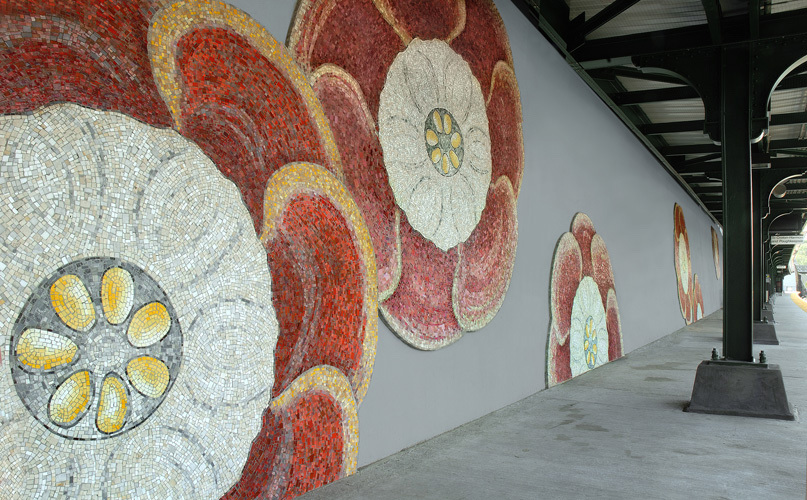
Smalti - Italian mosaic tiles
Smalti is traditional hand-cut mosaic glass that has a different look and feel from molded tile. This is the glass of choice for reproducing antique mosaic art, icons or making modern interpretations of classical designs. Smalti is different from regular glass tile in that regular glass tile are cut in bands directly from the surface of the glass slab, creating relatively regular, smooth and even squares. Smalti, on the other hand, is rectangular in shape and is intriguing precisely because it is cut at an angle to the glass slab. It is the sheared, uneven cut side of the glass which serves as the top surface of the tile. It is this cut that gives smalti its reflective, shimmering brilliance that cannot be matched.
The creation of smalti starts with the same basic ingredients used to make other types of glass: sand, soda and stabilizing compounds. These ingredients, along with the coloring agents, are heated in furnaces at extremely high temperatures to create a glass paste.
When the color and firing have reached the desired point – and this may take days – the fused molten paste is removed from the melting pot. A long, heavy spoon is beaten rhythmically on the paste, as the glowing ball of glass is squeezed and flattened into oblong slabs, and then the slabs are slowly and methodically cooled.
The large glass slabs are first sliced into rods and then chipped down into the small rectangles you see on the walls of the stations of the Green Line.
This information about smalti came from: mosaicsmalti.com