Evaluating BRT Corridors
In September and October 2020 we engaged transit customers and the community to identify their top corridor priorities and asked for feedback how these principles should be weighted when evaluating corridors:
Advance equity and reduce regional racial disparities: Transit can reduce disparities by improving connections to jobs and opportunities for low-income populations and people of color.
Build on success to grow ridership: The number of trips taken on transit and the number of people using transit is a good measure of the transit system’s usefulness and how well it serves riders.
Design a network that supports a transit-oriented lifestyle: A transit system can allow people to get to work, education, entertainment, services, and friends and family without owning a personal vehicle.
Ensure the long-term sustainable growth of the bus network: Growing the BRT network in places that support frequent bus service today will help ensure that these corridors can be served with fast, frequent, and reliable service in the long term.
Nearly half of the respondents ranked advancing equity considerations as their top priority. See a summary report and presentation of the September engagement process.
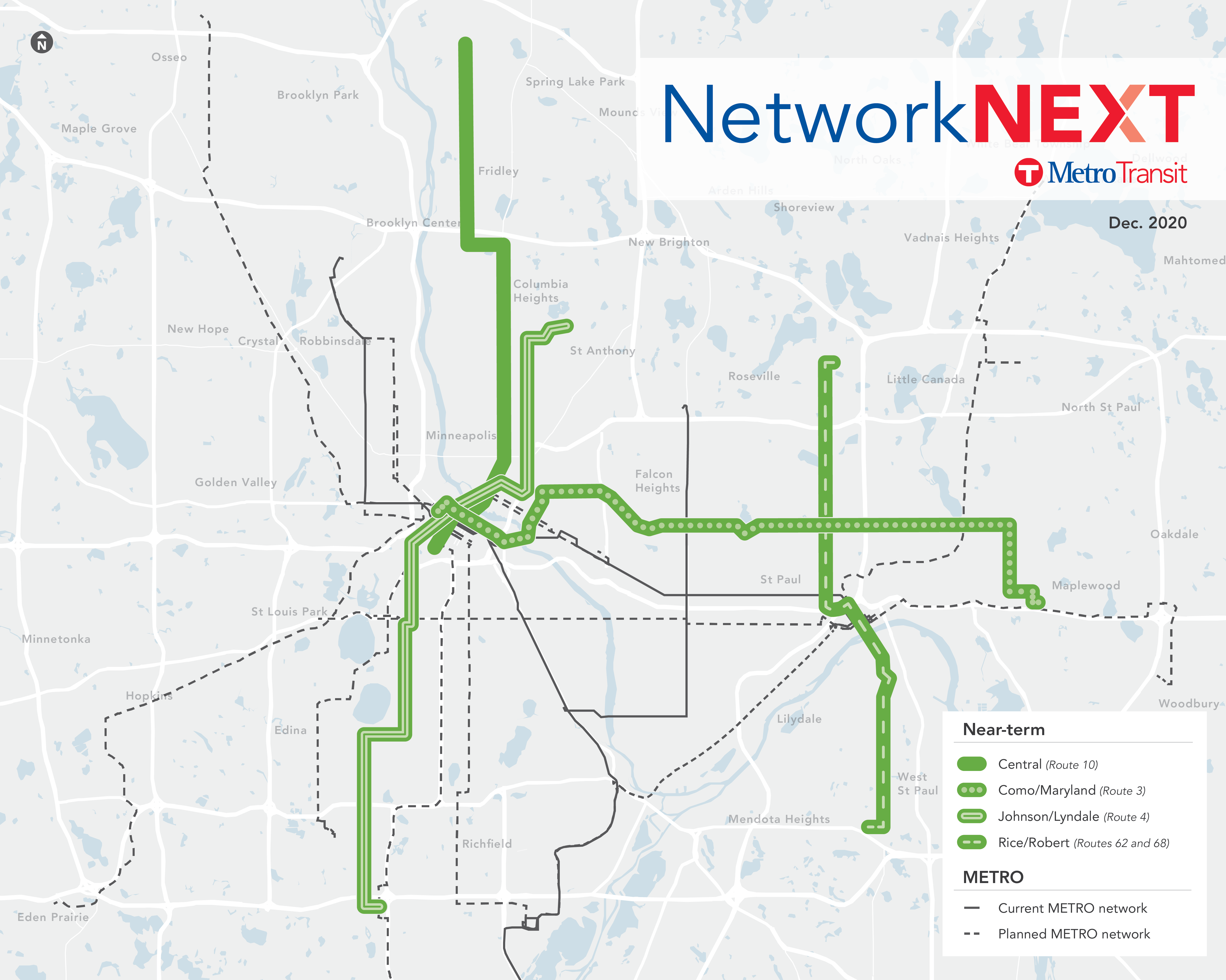
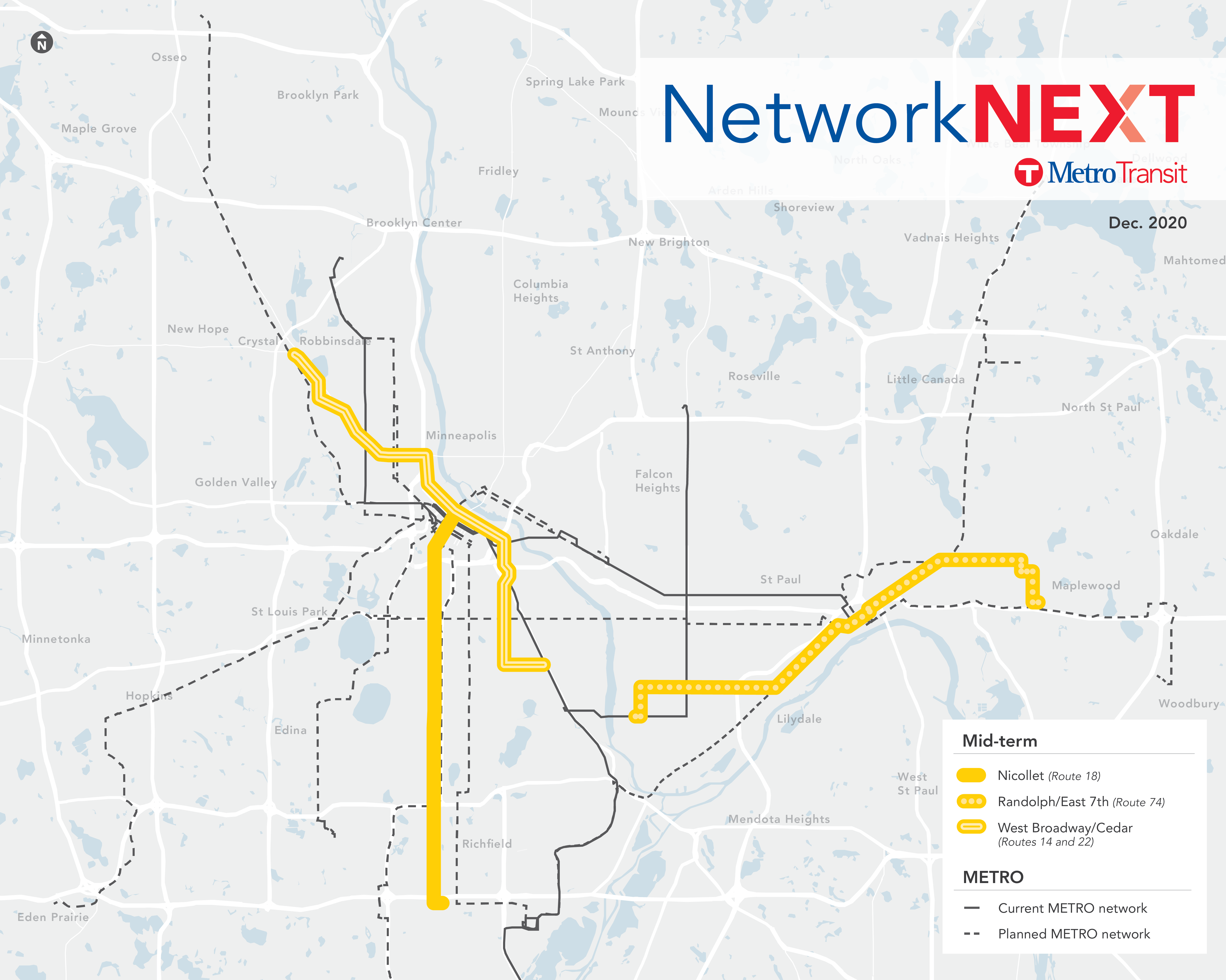
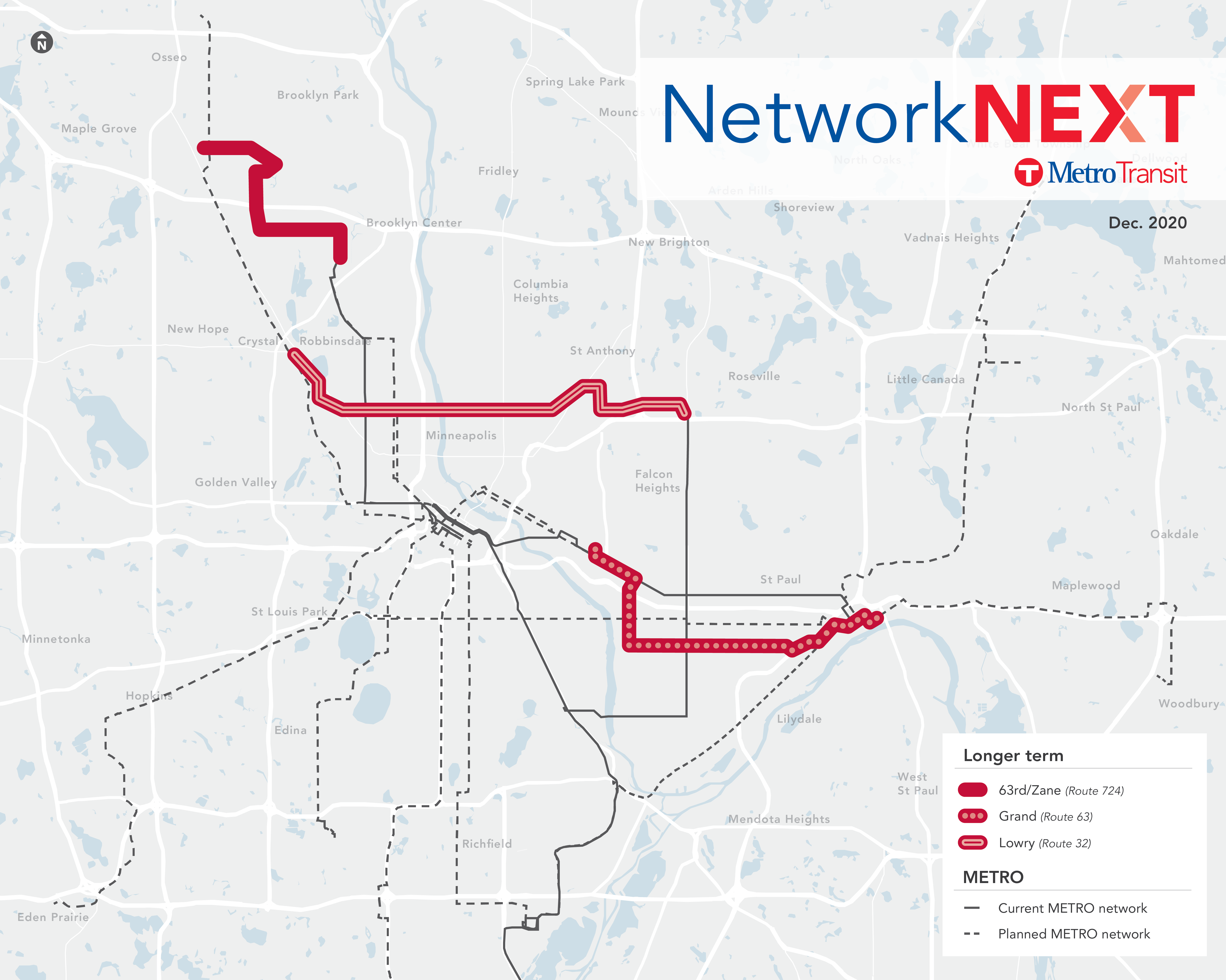
This fall, we developed concept plans to estimate costs, ridership, and other benefits; and, evaluated and weighted corridors based on public feedback and principles. Based on the outcome of that process, we’ve prioritized them into three tiers for near-term, mid-term, and longer-term implementation.
Watch this short video for more information about the process.
In December and January we asked the public to help us identify the F, G and H Lines from the corridors identified for near-term implementation. The survey closed on Jan. 20. A summary of what we heard will be posted in late February.